Bridge Labs Hire
Bridge Labs' mission is to connect development teams and hiring managers with top talent from African countries, allowing companies in the United States to take full advantage of this talent pool when looking for affordable developer talent.
As the company continues to grow, they sought to build out a process for users to post jobs, conduct interviews, and hire candidates from their platform. This would allow users to complete more of the process independently, resulting in faster conversion times and an experience that could scale with a growth in users and content within the process.


The initial outlined process for finding and hiring a candidate had too many steps and was confusing.
Since the hiring flow would be a net new process, I started with developing a user experience journey map to define the process a user would take to reach conversion (hiring a candidate) and to anticipate any functionalities we would need to integrate into the design.
With user research data, I was able to develop user personas that I could map out on the journey and further ideate what actions a user would be taking during this process. The process entailed the user creating a job description and scheduling a mandatory consultation call with Bridge Labs. After a shortlist of candidates would be delivered to the user, at which point they would be able to schedule interviews. Finally, the user would be able to extend an offer to a candidate from their shortlist.
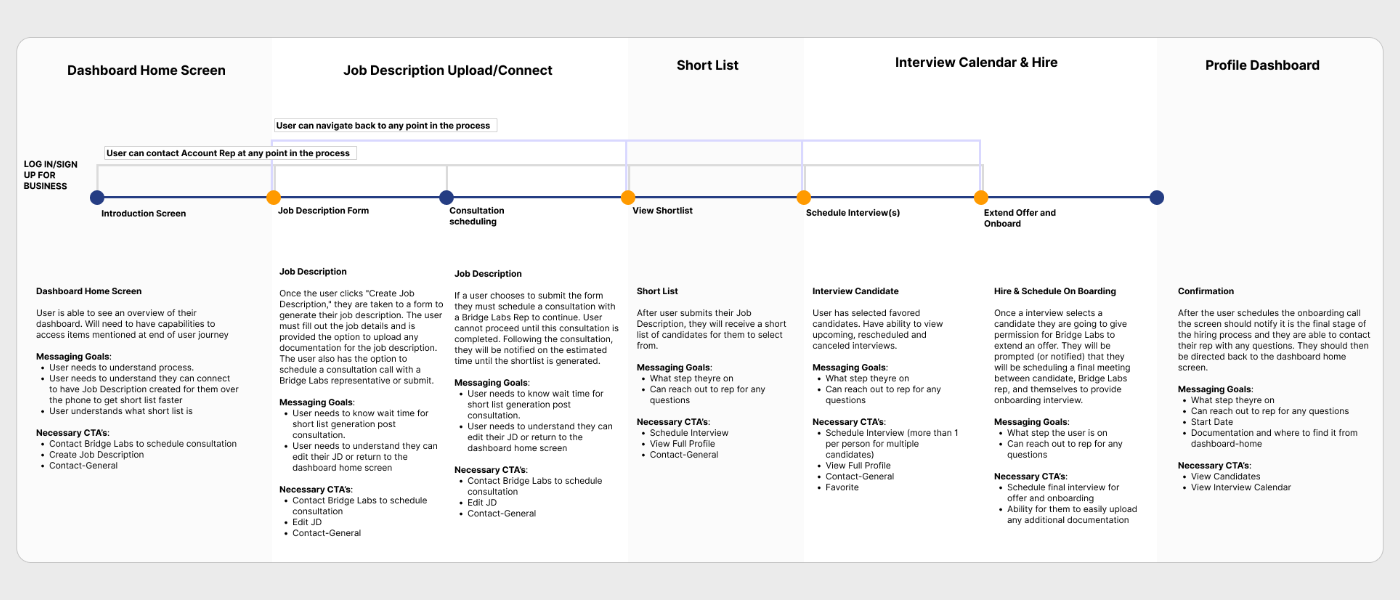
Mapping out these steps, I identified that the process would need to account for various user needs and friction points. The largest friction point occurred after the job description, where the user would need to schedule a consultation for a later date, removing them from the process.
Since this delay occurred after the first step, I wanted to improve the experience by giving the user the ability to schedule the meeting prior to generating a job description. This different path would allow users to complete the job description and consultation on the same call, removing the opportunity for user drop-off.
I was also able to determine that the designs would need to account for users hiring multiple candidates for the same and multiple positions within a user's account — keeping elements organized so that a user could schedule multiple interviews. With this in mind, I moved to the wireframe phase.
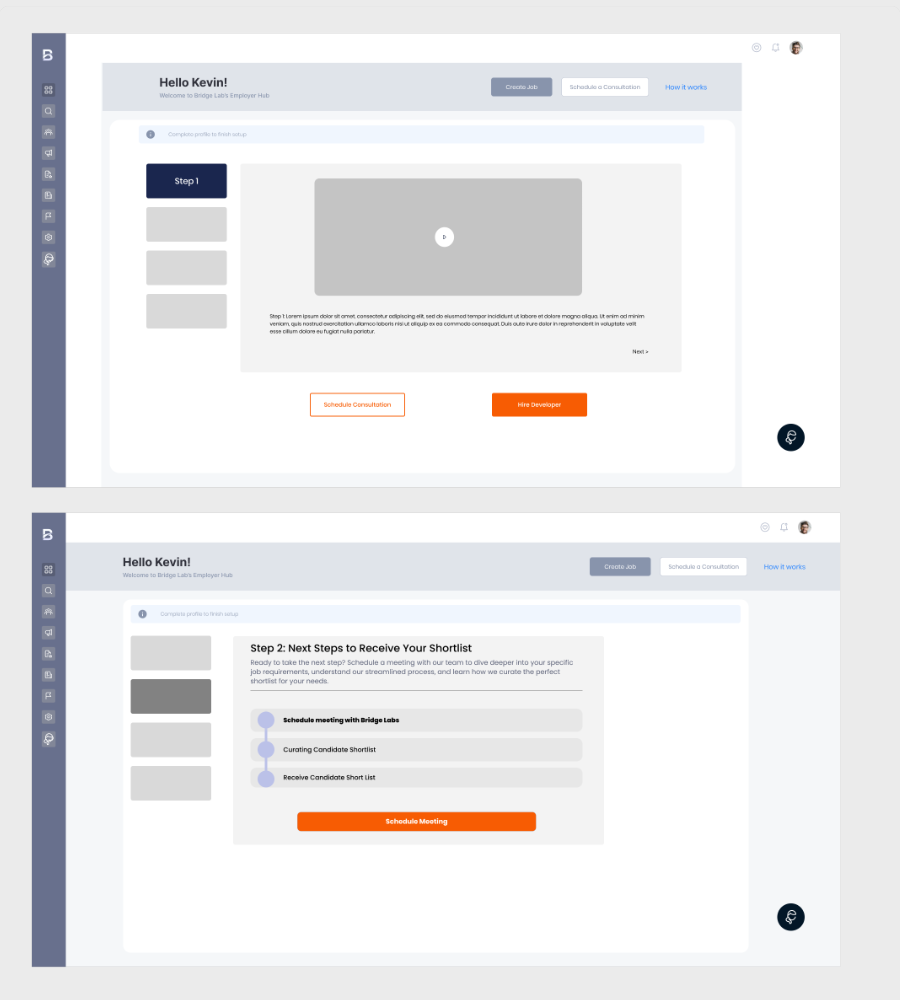
Keeping these concepts in mind, we moved to wireframing the screens and identifying key components and functionalities. We gave users the option to schedule their consultation immediately by including a CTA on both the landing page and job description screen. This reduced friction and minimized the opportunity for drop-off early in the process.
To convey transparency, we added a progress component on the "waiting for shortlist" screen. We also used a breadcrumb to allow users to navigate between steps and return to edit their job description at any point.
With the layout and web elements defined in our wireframes, we collaborated with the lead UI designer (Hermann) to ensure web elements would push users through the pipeline. We reserved primary CTA colors for interactions that advance users through the funnel, and spent time collaborating on the language used to ensure clear communication of the functionality behind them.
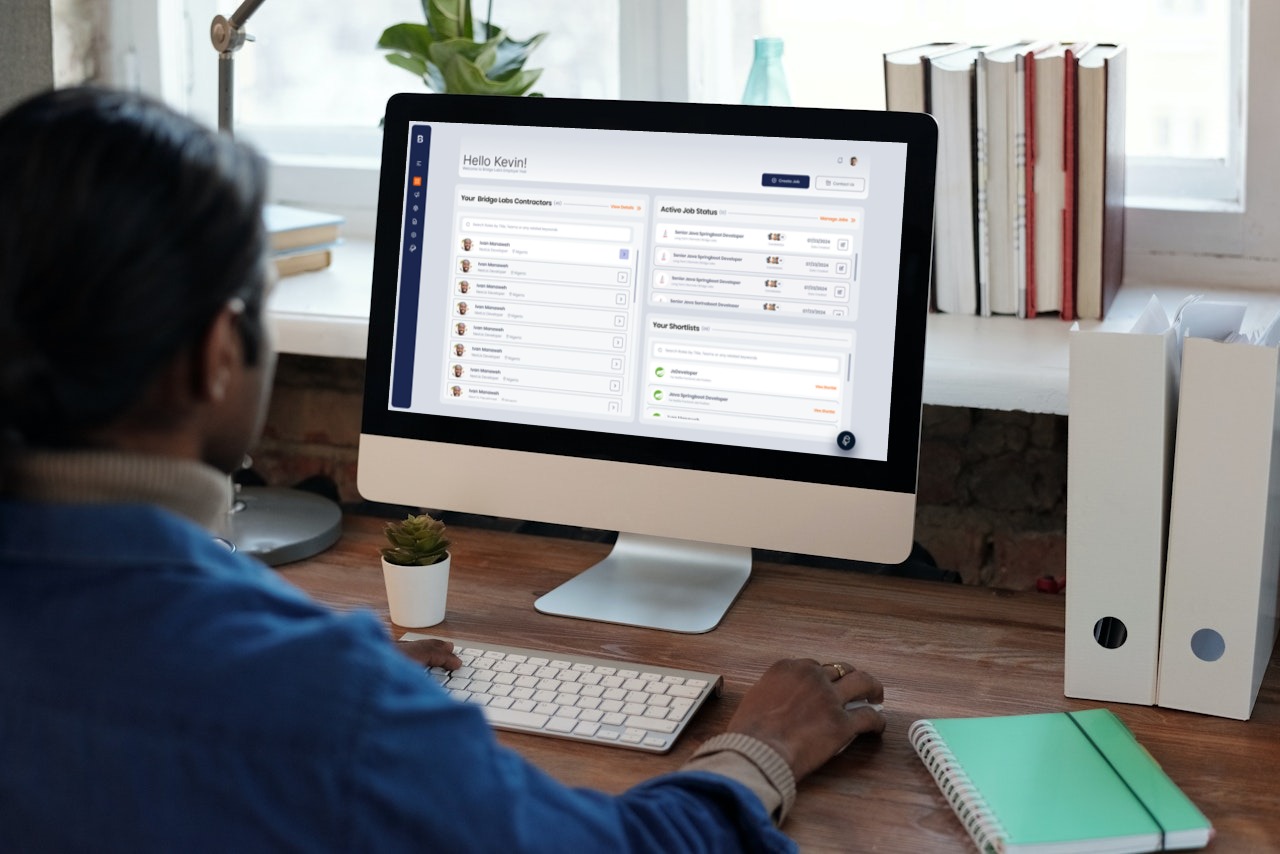
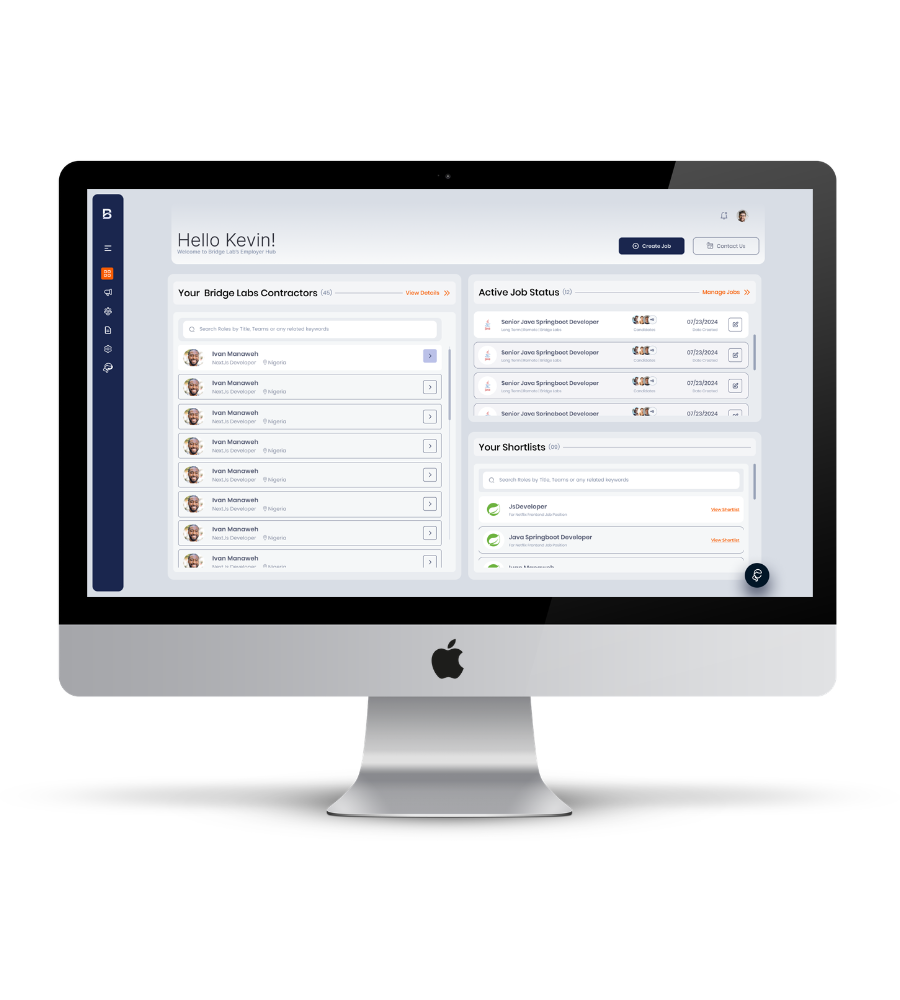
The prototype for these screens was presented and passed onto the development team. Given the opportunity to continue working on the hiring flow, I would like to conduct qualitative research to gain better insight into user needs and pain points in the process. I would also like to experiment with different copy used for the CTAs to see if there is any opportunity to provide more clarity to users.
As this is a net new experience for Bridge Labs, continued research will be essential to understanding user needs and identifying opportunities to improve the platform over time.